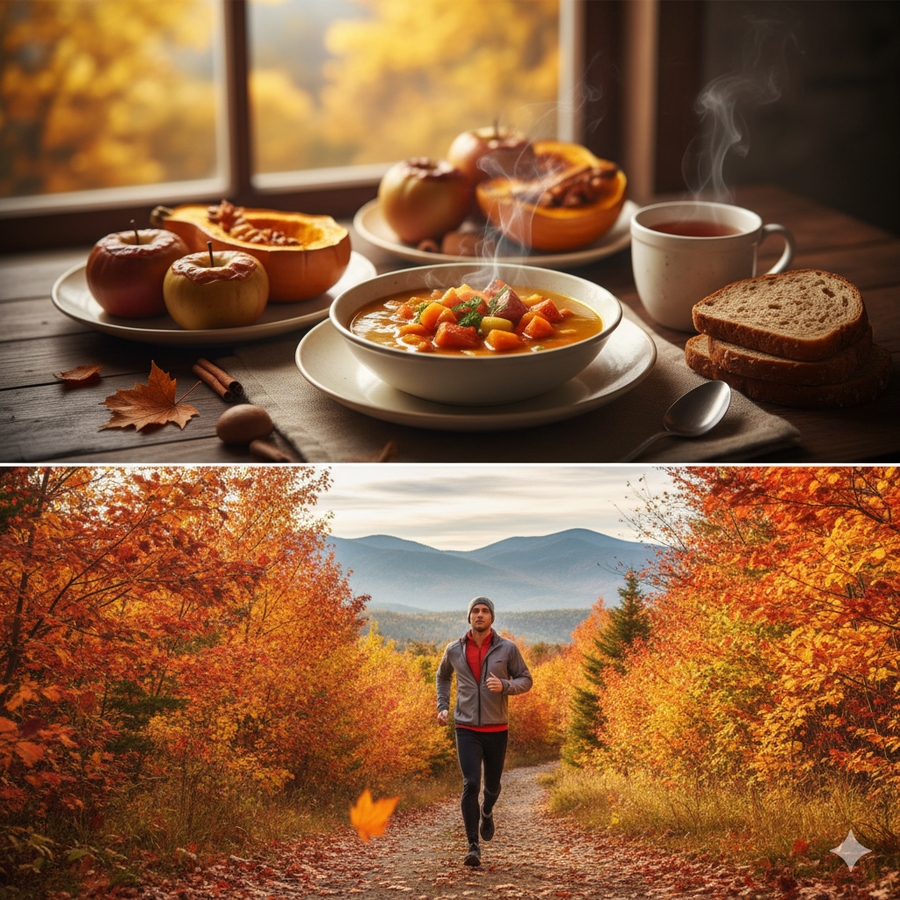
November’s crisp, cool air brings unique opportunities and challenges for maintaining a healthy lifestyle, making it crucial to adjust your nutrition and physical activity habits. The seasonal shift often encourages cravings for heavier comfort foods and an inclination toward indoor relaxation, which can lead to weight gain and a dip in energy. To counteract this, prioritize warming, nutrient-dense meals. This is the perfect time to incorporate seasonal produce like pumpkins, squash, sweet potatoes, apples, and root vegetables, which are rich in fiber, vitamins (especially A and C for immune support), and antioxidants. Don’t forget to stay hydrated; though you may feel less thirsty in the cold, your body still loses fluid through respiration and exercise, so be sure to drink plenty of water or warm, unsweetened teas and broths.
While the shorter, darker days can be demotivating, physical activity in the fall is invigorating and beneficial. Cooler temperatures can actually make outdoor exercise, like brisk walking, hiking to enjoy the foliage, or running, more comfortable than in the heat of summer, potentially boosting your endurance and calorie burn.When heading outdoors, layering clothing is key—start with a moisture-wicking base, add an insulating fleece layer, and finish with a waterproof/windproof shell, and cover your extremities to prevent heat loss.Exercise also plays a vital role in mood elevation, helping to combat the "winter blues" or Seasonal Affective Disorder (SAD) by boosting feel-good endorphins.
For those days when getting outside simply isn't feasible, maintaining a consistent indoor fitness routine is essential.Utilize home workouts—such as bodyweight exercises, yoga, or following online fitness classes—to meet the recommended 150 minutes of moderate-intensity aerobic activity per week.Furthermore, focus on immune-boosting nutrition as cold and flu season approaches.Seek out foods fortified with Vitamin D, which is harder to synthesize from sunlight in late fall, and ensure a generous intake of Vitamin C from citrus and peppers.By intentionally combining warm, nourishing foods with regular activity, you can build a strong foundation for health and energy throughout the entire season.Sources:
Winter Wellness: Maintaining Your Health During the Cold Months
You Are What You Eat: Important Nutrients During the Autumn
Fall Fitness and Nutrition: Tips for Staying Healthy as Temperatures Cool