Treating Fire Ants
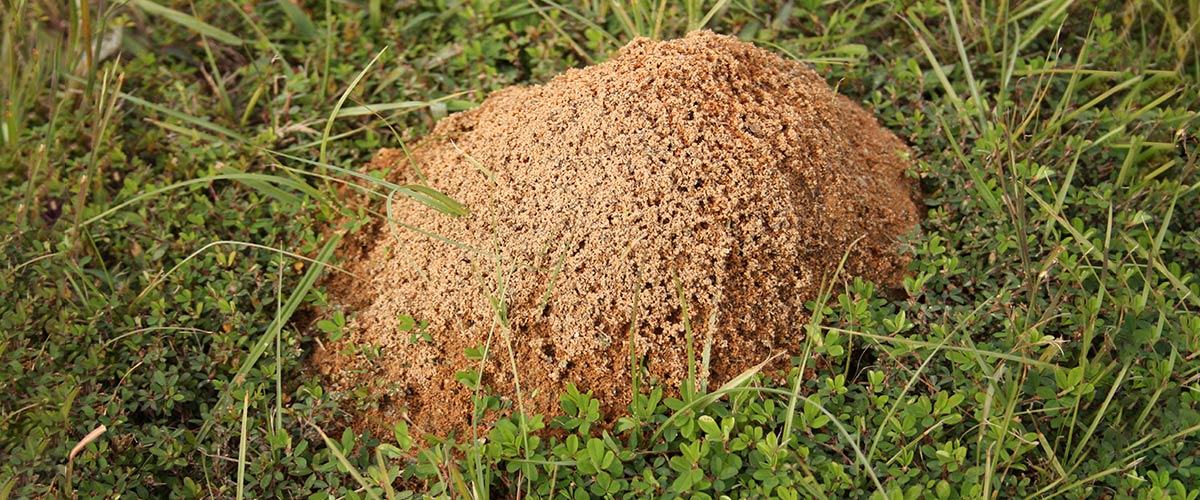
Fire ants are a pain and our more moderate temperatures, and wetter weather has brought about more activity. Generally speaking, these pesky creatures are less active when temperatures are below 70 degrees and during extremely dry weather. With more moderate temperatures and following a “rainy” season they have made a strong resurgence in many yards, garden, flowerbeds and along the roadside. In fact, they are popping up all over.Control begins with proper identification. These ants are 1/8 to 1/3-inch-long and reddish brown in color. You can identify a fire ant mound by gently brushing across the top with your foot or a stick and pushing away the upper layer of soil. If it’s an active fire ant mound, they will rush to the top and scatter around the mound in a defensive manner to identify what caused the disturbance. Quickly back away until they settle back down.
Lasting control can often be difficult given their life cycle and habits. Mounds revolve around a queen which stays deep in the mound while worker ants forage for food and protect the mound. During early spring and fall their activity is generally closer to the top of the ground whereas during the hotter months they will go deeper into the mound to beat the heat. Disturbances often cause the mound to move and the adoption of a new queen.
If there are only one or two mounds in the area you are protecting, a single mound application will do the trick. Products such as acephate (Ortho Fire Ant Killer), indoxacard (Spectracide Fire Ant Once and Done) or others will work fine. Depending on the material, lightly dust the mound as if flouring a cake pan (if an insecticidal dust) or mix the soluble chemicals with a gallon of water. Without disturbing the mound pour the gallon mixture over the mound in a manner to simulate rain. One half gallon of solution will treat one mound up to 6 inches in diameter. Be sure to carefully read the product label to determine the proper use, rate and personal protective measures required.
If you have multiple mounds to control over a large area, the application of a bait first will help your cause. Broadcast a bait material like Amdro, Extinguish, or others at the recommended rate, over the infested area. Ants respond to baits placed around the mound rather than on top of the mound. After 5-7 days check the mounds for activity. If they are still active treat the individual hill with a single mound treatment as discussed above. This 2-step approach generally will give control on large areas, but remember this pest is highly adaptive and here to stay. For additional information about identification, life cycle and control strategies visit this site or call our office for more information.